
Introduction
There’s something about airports that just feels exciting.
The uniforms. The energy. The feeling of being part of a world that’s always moving. Planes taking off every few minutes, passengers from all over the world, and professionals who make it all look effortless.
If you’ve ever looked at a cabin crew member or an airport ground staff and thought — I want to do that — you’re not alone. Thousands of students across India dream of working at an airport.
And here’s the best part: you don’t need a fancy degree to get there.
If you’ve just finished your 12th boards, you are already eligible to start your journey toward a real airport job. This guide will walk you through everything — roles, salaries, eligibility, courses, and exactly how to get started in 2026.
Can You Get an Airport Job After 12th?
Yes. Absolutely, 100% yes.
Most airport jobs in India do not require a graduation degree. A 12th pass certificate, the right training, and a few key skills are enough to get you through the door.
Here’s what generally matters more than marks:
- Your communication skills (especially English)
- Your grooming and professional appearance
- Your attitude and customer service ability
- A recognized aviation or hospitality training certificate
Airlines and airport companies hire freshers every single year. They’re not looking for toppers — they’re looking for people who are presentable, confident, and trained to handle real-world situations.
The right training makes all the difference.
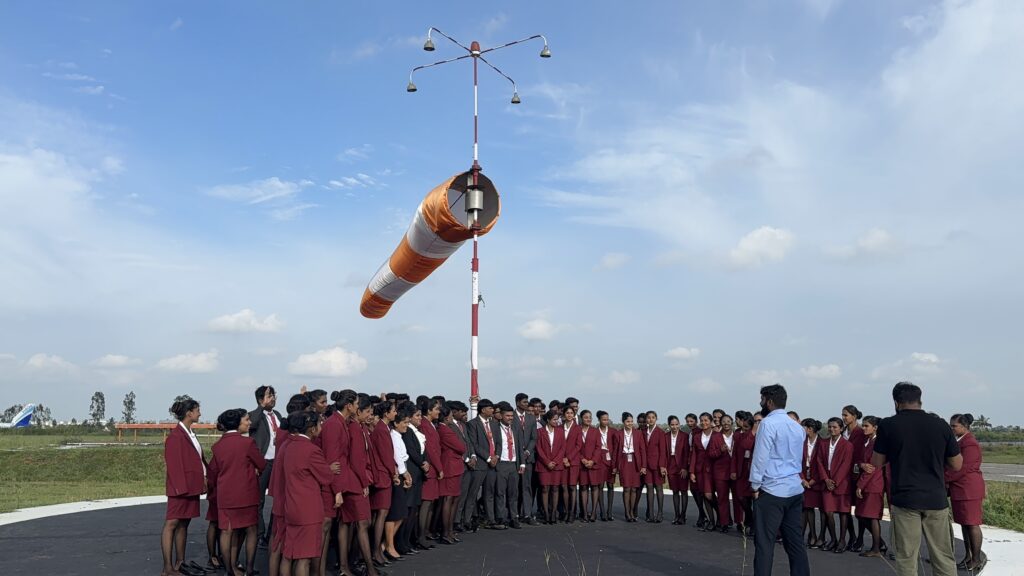
Top Airport Jobs After 12th
Let’s look at the actual roles you can apply for after completing 12th and the right course.
Ground Staff Jobs
Ground staff are the backbone of airport operations. They’re the first point of contact for passengers — right from check-in to boarding.
Responsibilities include:
- Passenger check-in and ticketing assistance
- Boarding gate management
- Flight information updates and announcements
- Handling special assistance passengers
- Coordinating with airline crew and airport operations team
Ground staff jobs after 12th are one of the most accessible entry points into the aviation industry. Airlines like IndiGo, Air India, SpiceJet, and Akasa Air regularly hire trained ground staff through placement drives.

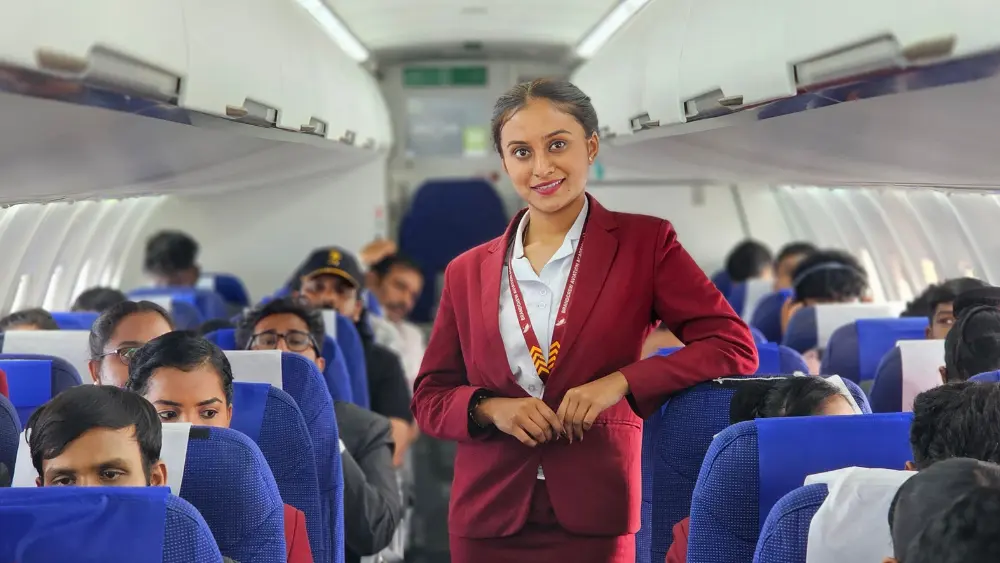
Cabin Crew (Air Hostess / Flight Steward)
This is the dream role for many students — and for good reason.
Cabin crew members are responsible for passenger safety and comfort onboard flights. They represent the airline and are trained to handle everything from serving meals to managing emergencies.
The perks are real:
- Travel to cities (and countries) you’ve never seen
- A structured, professional lifestyle
- Smart uniform and a globally recognized career
- Competitive salary with allowances
You need good communication, a warm personality, physical fitness, and proper cabin crew training. No engineering degree required.
Airport Customer Service Agent
Customer service agents work at information desks, airline counters, and lounges. They handle passenger queries, complaints, rebooking, and general airport navigation assistance.
Key skills needed:
- Patience and a calm demeanor
- Strong English and Hindi communication
- Problem-solving ability
- Knowledge of airline and airport procedures
This is a great role for students who are good with people and enjoy helping others.
Baggage Handling & Ramp Staff
Not every airport job is about facing passengers. Ramp and baggage handling staff work behind the scenes — and they’re absolutely essential.
Responsibilities include:
- Loading and unloading luggage from aircraft
- Operating ramp equipment and baggage belts
- Ensuring cargo is correctly tagged and handled
- Coordinating with ground operations team
This is a more physical role but offers stable employment, shift-based work, and good growth potential in airport operations.
Airport Security Staff
Airport security staff are trained to ensure passenger and premises safety. They operate security check points, screen luggage, and monitor restricted areas.
This role is ideal for students who are physically fit, alert, and detail-oriented. Hiring is done through both government agencies (like CISF) and private security firms that work with airports.
Skills Required for Airport Jobs
Before you start applying, make sure you’re building the right skills. Marks don’t matter here as much as these do:
- Communication Skills – You’ll be talking to passengers, colleagues, and supervisors all day. Clear, confident communication is non-negotiable.
- English Proficiency – Most airports and airlines operate in English. You don’t need to be perfect, but you need to be comfortable and fluent.
- Grooming and Presentation – Aviation is one of the few industries where how you look and carry yourself is part of the job. Neat appearance, good posture, and professional dressing matter.
- Customer Handling – Dealing with stressed, tired, or confused passengers requires patience and empathy.
- Teamwork – Airport operations run on coordination. Being a team player is essential.
- Adaptability – Shifts change, flights get delayed, situations get tough. Flexibility is a must.
These are all skills that can be trained and developed — which is exactly what good aviation institutes focus on.
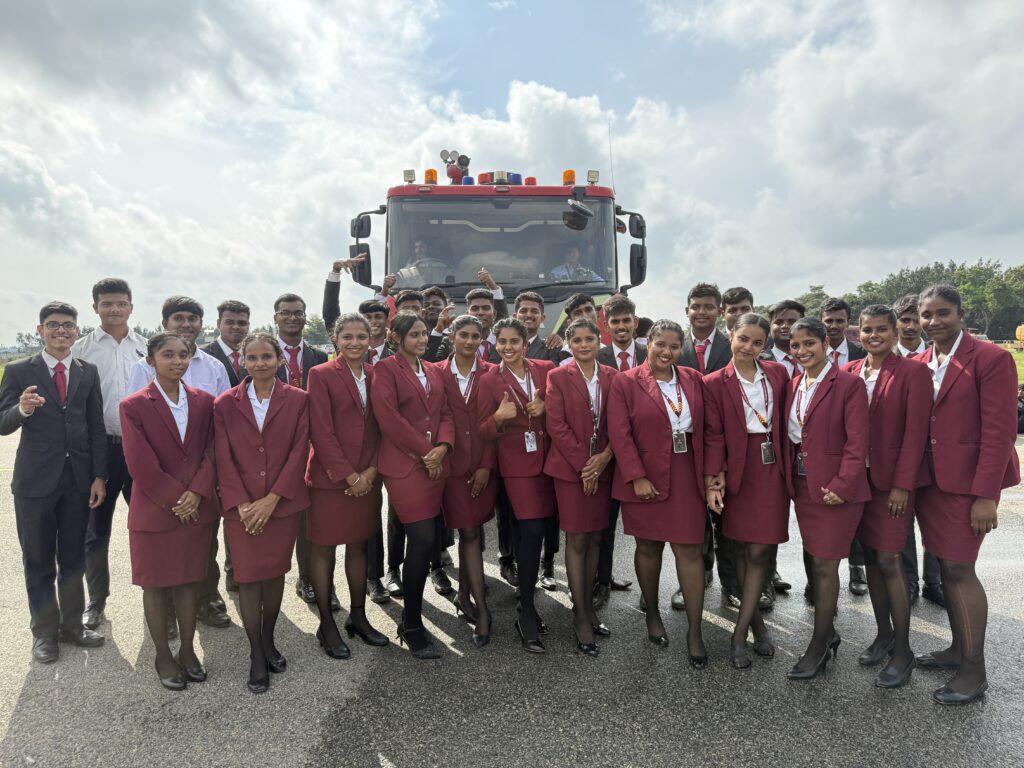
Qualifications and Eligibility Criteria
Here’s a simple breakdown of what most airport employers look for:
Education:
- Minimum: 12th pass (any stream — Arts, Commerce, or Science)
- Some airlines prefer candidates with a diploma or certificate in aviation or hospitality
Age:
- Generally 18 to 27 years for most entry-level roles
- Cabin crew age requirements vary slightly by airline
Height (for Cabin Crew):
- Female candidates: Usually 157 cm to 163 cm minimum
- Male candidates: Usually 170 cm to 173 cm minimum
- Airlines also check that height and weight are proportionate
Physical Fitness:
- No major medical conditions
- Good eyesight (corrected vision is acceptable for some roles)
- Ability to handle physically demanding tasks (especially for ramp/baggage roles)
Other:
- Valid Indian passport (or willingness to get one)
- Clear background verification
If you’re within these parameters, you are eligible. Period.
.
Salary of Airport Jobs in India
Let’s talk numbers — because this is what most students and parents want to know.
Here’s a general salary range for airport jobs in India:
- Ground Staff – ₹18,000 to ₹35,000/month (entry level)
- Cabin Crew (Domestic) – ₹25,000 to ₹60,000/month
- Cabin Crew (International) – ₹80,000 to ₹1,50,000+/month
- Customer Service Agent – ₹18,000 to ₹30,000/month
- Ramp/Baggage Staff – ₹15,000 to ₹28,000/month
- Airport Security – ₹15,000 to ₹25,000/month
Plus, many roles come with additional benefits:
- Travel allowances and free/discounted flight tickets
- Accommodation allowances
- Medical benefits
- Performance bonuses
The airport jobs salary in India has been growing steadily as aviation expands. With 2–3 years of experience, senior roles and team leader positions open up — often doubling the starting salary.
Best Courses to Get Airport Jobs After 12th
The right course is your shortcut into the industry. Here are the most relevant options:
Short-Term Courses (6 months – 1 year):
- Certificate in Airport Ground Staff Training
- Certificate in Cabin Crew Training
- Aviation Customer Service Program
- Travel & Tourism Certificate Course
Diploma Courses (1 – 2 years):
- Diploma in Aviation Hospitality
- Diploma in Airport Management
- Diploma in Travel, Tourism & Aviation
What to look for in an aviation course:
- Industry-aligned syllabus
- Practical training and mock sessions
- Grooming and personality development
- Placement assistance with real airline contacts
Aviation courses after 12th are your entry ticket. The quality of your institute directly impacts your chances of getting placed.

Step-by-Step Process to Get an Airport Job
Here’s exactly how to go from 12th pass to airport employee — step by step.
Step 1: Choose the Right Course
Start by deciding which airport role interests you most — cabin crew, ground staff, customer service, or operations.
Then pick a course that specifically trains you for that role. Don’t just pick the cheapest option or the nearest institute. Research the curriculum, faculty, and placement record.
Step 2: Join a Professional Training Institute
This is the most important step. A good institute doesn’t just teach you theory — it prepares you for the actual job.
Look for institutes that offer practical training, mock interviews, airline-style grooming sessions, and have real placement tie-ups with airlines and airport companies.
Step 3: Develop Communication & Grooming Skills
Use your training period to genuinely work on yourself.
- Practice speaking English every day
- Work on your posture, body language, and presentation
- Learn how to handle difficult passenger situations
- Build confidence through group discussions and mock interviews
This is what separates candidates who get hired from those who don’t.
Step 4: Attend Interviews & Walk-ins
Airlines and ground handling companies like Air India SATS, Bird Group, Celebi, and AISATS regularly conduct walk-in interviews and campus hiring.
Your institute should alert you to these opportunities. Attend every drive you can — even for practice. Each interview makes you sharper.
Step 5: Get Placed in Airlines or Airport Companies
With the right training and preparation, placement follows. Most good institutes have a placement cell that actively connects students with hiring companies.
Stay patient, stay consistent, and keep improving. Placements in aviation are very much achievable within 1–3 months of completing your course.
Why Professional Training is Important
You might wonder — can’t I just apply directly?
Technically, yes. Practically, it rarely works without training.
Here’s what proper professional training gives you that self-study doesn’t:
- Industry exposure – You learn real airline procedures, not just textbook knowledge
- Mock interviews – You walk into actual airline interviews having already done 10 practice rounds
- Grooming sessions – You know exactly how to dress, speak, and present yourself
- Confidence – Perhaps the biggest factor in getting hired
Institutes like Brandcrew Aviation Academy train students specifically for the aviation industry — combining technical knowledge with personality development and active placement support. It’s this combination that consistently gets students hired.
Don’t skip professional training. It’s an investment that pays back within months.
.
Career Growth in Aviation Industry
Airport jobs are not dead-end jobs. The growth potential is very real.
Here’s how a typical career path can look:
- Year 1–2: Entry-level ground staff or cabin crew
- Year 3–5: Senior agent, team leader, or in-flight supervisor
- Year 5+: Airport operations manager, cabin crew trainer, or shift supervisor
For cabin crew specifically:
- Domestic airlines → International airlines
- Junior crew → Senior crew → Purser / Cabin Manager
- Airline trainer or ground operations manager
International opportunities are also genuinely accessible. Middle Eastern airlines like Emirates, Etihad, Qatar Airways, and Air Arabia actively recruit Indian cabin crew. These roles offer tax-free salaries and global exposure.
Aviation is one of the few industries where a 12th pass student can, within 10 years, be managing operations at an international airport.
Airport Job Opportunities in Bangalore
Bangalore is one of India’s fastest-growing aviation hubs.
Kempegowda International Airport (BIAL) is one of the busiest airports in South India, handling millions of passengers every year. With new terminals and expanded operations, the demand for trained airport professionals in Bangalore is consistently high.
Opportunities in Bangalore include:
- Hiring by ground handling companies operating at BIAL
- Airline office and ticketing roles in the city
- Aviation training placements connecting to Pan-India opportunities
For students based in Bangalore or nearby areas, this is an excellent time to enter the field. The airport is growing, the demand is real, and trained candidates are being actively hired.
Common Mistakes to Avoid
Many students miss out on airport jobs not because they’re unqualified — but because of avoidable mistakes.
Watch out for these:
- Not working on communication skills – This is the #1 reason candidates get rejected. Airlines will not compromise on this.
- Choosing the wrong training institute – A cheap course with no placements is a waste of time and money. Research before you enroll.
- Ignoring grooming – Showing up to an airline interview without attention to appearance sends the wrong message immediately.
- Giving up after one rejection – Aviation hiring is competitive. Keep attending drives and improving after each interview.
- Not getting a passport – Many students delay this. Apply early. You’ll need it.
Avoid these mistakes and you’ll already be ahead of most applicants.
Final Thoughts
Here’s what we want you to take away from this guide:
Airport jobs after 12th are real, accessible, and genuinely rewarding. You don’t need a degree, you don’t need connections, and you don’t need to wait years to start earning.
What you do need is the right training, the right attitude, and the willingness to show up and put in the work.
Thousands of students who finished 12th with average marks are today working as cabin crew, ground staff, and customer service professionals at airports across India — and abroad.
You can be one of them. The opportunity is there. The question is whether you’re ready to take it seriously.
Start today. Not next year. Not after one more entrance exam. Today.
Frequently Asked Questions (FAQs)
Yes. Most entry-level airport jobs are open to freshers. What matters is your training, communication skills, and grooming — not prior experience. Airlines and ground handling companies actively hire fresh candidates from aviation training institutes.
Entry-level ground staff in India typically earn between ₹18,000 and ₹35,000 per month. With experience and promotions, this can grow significantly. Additional benefits like travel allowances, medical coverage, and performance bonuses are often included.
Yes — English is essential. You don't need to speak like a news anchor, but you need to communicate clearly and confidently in English. Most airlines conduct interviews in English, and daily operations require it. Focus on this skill from day one of your training.
The best course depends on your target role. For cabin crew, a dedicated cabin crew training certificate is ideal. For ground staff, an airport ground staff or aviation hospitality diploma works well. Look for courses that include practical training, grooming, and placement assistance — not just theory.
Phone Number
“For admissions and inquiries, call BrandCrew Aviation Academy at
+91 7411015906
Email Address
“For admissions and general enquiries, email BrandCrew Aviation Academy at
brandcrewaviationacademy@gmail.com
Address
“Visit BrandCrew Aviation Academy at 12/18, 3rd Floor, Above Reliance Smart Point, SM Road, Near CSI Holy Cross, Jalahalli Cross Road, Bangalore – 560058.
Contact Us